
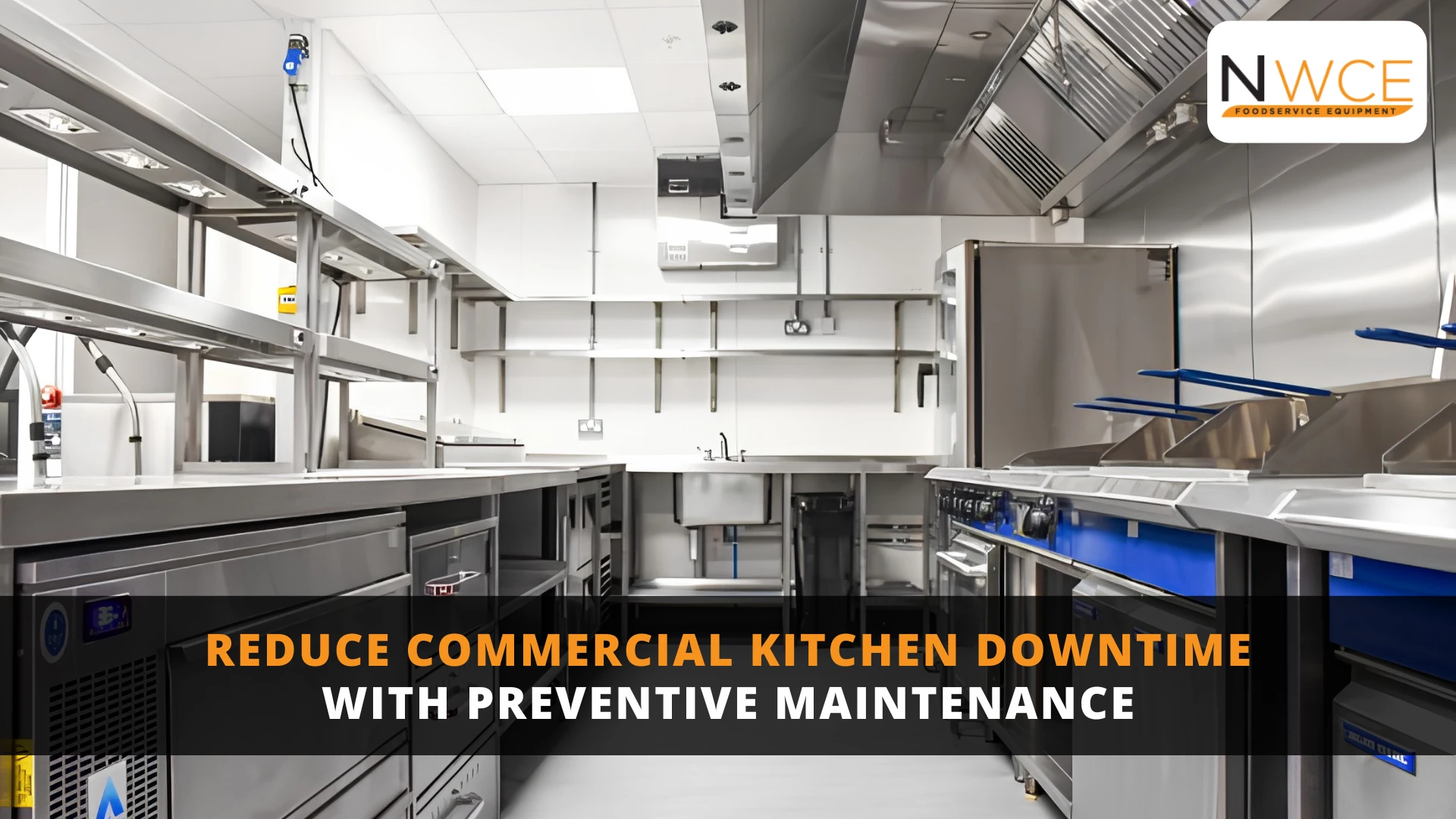
In a busy commercial kitchen, equipment needs to perform reliably every day. Ovens, refrigeration, dishwashers, fryers and other essential appliances are often used for long periods, placing them under significant pressure. Regular maintenance can help prevent commercial kitchen downtime by identifying potential issues before they lead to equipment failure. When equipment suddenly fails, the consequences can include delayed service, cancelled orders, food waste and unexpected repair costs.
A proactive approach to catering equipment maintenance can help reduce these risks. By scheduling regular inspections and servicing, businesses can identify potential problems before they develop into major breakdowns. NWCE Foodservice Equipment provides professional catering equipment services to help businesses maintain reliable, efficient kitchen operations.
Prevent Commercial Kitchen Downtime: WHY PREVENTIVE MAINTENANCE MATTERS
Waiting for equipment to fail before arranging a repair can be an expensive approach. A breakdown can happen at the worst possible time, particularly during busy service periods when equipment is working at maximum capacity.
Preventive maintenance involves regularly checking, cleaning, servicing and testing equipment to identify signs of wear or potential faults. This can help keep appliances operating efficiently while reducing the likelihood of unexpected downtime.
For busy restaurants, hotels, schools, hospitals and other foodservice environments, planned maintenance can provide greater confidence that essential equipment will remain operational when it is needed most.
CREATE A PLANNED MAINTENANCE SCHEDULE
One of the most effective ways to reduce downtime is to establish a structured maintenance schedule. Different types of equipment have different servicing requirements, so a maintenance plan should reflect the age, condition, usage and importance of each appliance.
Your schedule could include regular inspections of:
- Cooking equipment such as ovens, ranges and fryers
- Refrigeration and freezer equipment
- Commercial dishwashers and glasswashers
- Food preparation equipment
- Ventilation and extraction systems
- Electrical and gas-powered appliances
Keeping accurate service records can also make it easier to identify recurring faults and determine when an appliance may need replacement rather than continued repairs.
NWCE Foodservice Equipment can support businesses with planned catering maintenance services, helping them take a proactive approach to equipment care and reduce the risk of unexpected failures.
Prevent Commercial Kitchen Downtime By PRIORITISING CRITICAL KITCHEN EQUIPMENT
Not every appliance has the same impact on your operation. A fault with a non-essential piece of equipment may be inconvenient, whereas a failed oven, refrigerator or dishwasher could significantly disrupt service.
Therefore, your catering equipment maintenance plan should prioritise the equipment that is most critical to daily operations. High-use appliances and equipment that would cause major disruption if they failed should receive particular attention.
This approach allows businesses to focus maintenance resources where they can have the greatest impact on kitchen uptime.
IDENTIFY SMALL PROBLEMS BEFORE THEY BECOME BREAKDOWNS
Many equipment failures can begin with relatively minor issues. Unusual noises, inconsistent temperatures, leaks, poor performance or increased energy consumption can all indicate that equipment requires attention.
Regular inspections provide an opportunity to investigate these warning signs before they develop into serious faults.
Professional catering maintenance services can also provide a more detailed assessment of equipment condition. Engineers can identify worn components, performance issues and other problems that may not be immediately obvious to kitchen staff.
Addressing these issues early can help reduce the need for emergency catering equipment repairs and minimise disruption to kitchen operations.
COMBINE MAINTENANCE WITH STAFF CHECKS
Professional servicing should form the foundation of your maintenance programme, but kitchen staff can also play an important role.
Simple daily checks can help identify obvious issues quickly. Staff should be encouraged to report unusual noises, damaged components, temperature problems or equipment that is not performing as expected.
Cleaning equipment correctly is equally important. Grease, food debris, limescale and other build-up can affect performance and contribute to premature wear. Following manufacturer guidance and maintaining good cleaning routines can therefore support the wider maintenance plan.
WORK WITH EXPERIENCED CATERING EQUIPMENT ENGINEERS
Professional catering equipment services can help businesses establish a maintenance programme suited to their kitchen and equipment. Rather than relying solely on reactive repairs, planned servicing provides a more structured approach to protecting essential appliances.
NWCE Foodservice Equipment has experience supporting commercial kitchens with equipment servicing, maintenance and repairs. An experienced engineer can inspect equipment, identify developing faults and recommend appropriate repairs or replacement where necessary. This can help businesses make informed decisions about their equipment instead of waiting for a complete failure.
Where a breakdown occurs, access to professional commercial kitchen equipment repairs can also help minimise disruption and get the kitchen operating again as quickly as possible.
CONSIDER MAINTENANCE WHEN DESIGNING A NEW KITCHEN
Preventive maintenance should be considered not only once a kitchen is already operating. It can also be incorporated into the design and installation process.
The position of equipment, access for engineers, ventilation, services and working space can all influence how easily appliances can be inspected, serviced and repaired.
NWCE Foodservice Equipment provides professional commercial kitchen design and installation services, helping businesses create practical layouts with equipment positioned around the needs of the operation. A well-planned kitchen can support efficient workflows while making ongoing maintenance and servicing easier.
Prevent Commercial Kitchen Downtime WITH A PROACTIVE APPROACH
Unexpected breakdowns are not always preventable in a busy commercial kitchen. However, businesses do not have to rely entirely on reactive repairs.
A structured catering equipment maintenance plan can help identify problems earlier, extend equipment lifespan and reduce disruption to daily operations. Combining scheduled professional servicing with staff checks, effective cleaning and prompt repairs creates a more proactive approach to equipment management.
For businesses that depend on their kitchens every day, investing in professional catering equipment repairs, servicing and maintenance from NWCE Foodservice Equipment can be an important step towards keeping operations running smoothly and reducing costly downtime.


